


Indirect procurement often suffers from poorly structured management, yet it remains a significant lever for cost savings. Faced with limited resources, many companies choose to outsource all or part of this function. This allows them to improve efficiency, gain access to specialist procurement expertise and achieve lasting cost optimisation. To exploit the full potential, the approach must be underpinned by thorough preparation and rigorous monitoring.
Contents:
- Why outsource your indirect procurement?
- What are the benefits of outsourcing your indirect procurement?
- What are the steps to outsourcing your indirect procurement?
With profitability pressures mounting, companies now need to bring their indirect procurement under control more than ever. Long regarded as non-strategic, this type of procurement often suffers from poorly structured management within organisations due to a lack of time and resources. Yet it has a considerable impact on companies' competitiveness and on teams' operational efficiency. To save time, cut costs and improve performance, some organisations choose to outsource all or part of their indirect procurement.
Why outsource your indirect procurement?
Indirect procurement covers all the goods and services needed for businesses to run smoothly, but which do not form part of their production process. Examples include office furniture and supplies, IT equipment, vehicle fleets, transport and travel, and professional services.
Because they are not directly linked to companies' core business, this type of procurement sometimes receives limited attention. While it may seem trivial at first glance, it actually conceals significant hidden costs. Behind this spending, there is often a fragmented supplier panel, multiple transactions scattered across the company, categories that are difficult to bring under control, or a lack of visibility over this spending.
“Buyers still spend almost three quarters of their time on purely transactional or operational activities. They therefore need to pursue rationalisation and automation strategies to improve efficiency and, ultimately, focus on more strategic tasks.[1]” explains Quentin Bures, Customer Data Manager at Manutan.
It is against this backdrop that some companies choose to outsource their indirect procurement. This involves entrusting some or all of their procurement to an external service provider that specialises in this area in order to optimise procurement processes, cut costs and improve performance.
Outsourcing can cover:
- Certain types of procurement: facility management, IT, human resources, logistics and transport...
- Certain parts of the procurement process: sourcing, negotiation, contract management or supply.
Throughout this strategy, procurement departments can focus on higher value-added tasks and on more strategic procurement categories.
What are the benefits of outsourcing your indirect procurement?
Outsourcing indirect procurement offers several benefits that help improve companies' competitiveness and profitability.
Saving time and improving efficiency
If not properly structured, indirect procurement can represent a significant workload for procurement departments. It often involves thousands of transactions and hundreds of suppliers to manage. These are all time-consuming, low value-added tasks that pile up, sometimes with peaks in activity at certain times of year. Outsourcing and bringing this procurement under control are a huge saving in time, efficiency and productivity for procurement teams.
Boosting procurement performance
Specialist service providers have in-depth knowledge of supplier markets, sector trends and procurement best practices. Thanks to their expertise, they are able to successfully implement a procurement strategy. This guarantees some of the best results in terms of cost, quality and commercial terms. They also provide solid reporting, which improves visibility and overall spend management.
Reducing administrative costs
Outsourcing indirect procurement also means cost savings. Service providers offer a carefully selected range at negotiated rates. By consolidating purchase volumes, they benefit from economies of scale and favourable terms. What's more, these organisations have built mature processes that help companies reduce their administrative costs. Ultimately, this optimises the entire Total Cost of Ownership (TCO).
What are the steps to outsourcing your indirect procurement?
The success of a procurement outsourcing project relies on thorough preparation and rigorous monitoring.
Step 1: Defining the scope
The first step is to define a clear roadmap. The company must decide which procurement categories it wishes to outsource, along with the targeted objectives and expected gains. This should take into account the characteristics and criticality of each category, as well as the resources currently allocated to it. Experts recommend starting with a limited scope, focusing on low value-added tactical purchases or those bought occasionally, then measuring the gains over the first six months before gradually extending the approach. This helps secure the project and demonstrate the benefits achieved.
Step 2: Selecting the partner
The second step is choosing the right partner. This partner must have recognised expertise in the relevant procurement categories, as well as an understanding of the company's specific challenges. Certain criteria are worth examining more closely: financial stability, the quality of the supplier network, digital tools, geographic coverage... Culture and values must also align with those of the company. Since this provider's role is to become an extension of the procurement department, the company can ask to meet the teams who will be working on its behalf.
Step 3: Connecting the tools
Outsourcing is usually accompanied by the digital transformation of procurement flows. Partners must interface their information systems to streamline exchanges. This makes it possible to synchronise every stage of the purchasing cycle: orders, approvals and invoicing. This technology reduces administrative errors, improves the traceability of operations and boosts process efficiency.
Step 4: Structuring the collaboration
To ensure the approach succeeds, it is essential to formalise governance rules. The contract must set out each party's responsibilities, decision-making processes, validation workflows, reporting arrangements and key performance indicators (KPIs). This clarity contributes to a smooth, harmonious and productive collaboration.
Step 5: Managing performance
Outsourcing procurement requires active management, underpinned by a continuous improvement approach. The company must maintain a strategic vision, regularly challenge its partner's proposals and preserve its in-house procurement expertise. For example, it may be worth benefiting from training to develop staff knowledge. This is how companies will be able to secure their procurement performance over the long term.
Manutan supports you
Manutan, Europe's leading B2B e-commerce company, supports you in optimising your indirect procurement. This isn't about outsourcing your procurement, but about benefiting free of charge from our expertise to structure its management, reduce your costs and boost your overall performance.
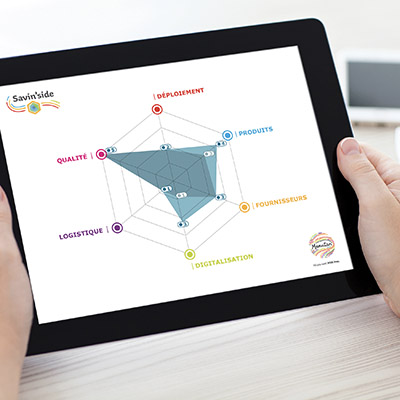
Drawing on our Savin'side® methodology, our procurement consultant teams lend their support to help you achieve your objectives, whether that means rationalising your supplier portfolio, optimising your consumption, or strengthening your sustainable procurement policy, among others. (available in all of Manutan's local entities across Europe, at the time of publication of this content)
At a time when procurement departments are overstretched, the challenge is no longer to manage everything in-house, but to mobilise the right resources in the right place. More than just a cost-cutting tool, outsourcing procurement is a way of making the supply chain more agile, efficient and effective, supporting business needs and strategic priorities.
[1] Quentin BURES (Customer Data Manager, Manutan), Webinar: Long tail, indirect and maverick spend... understanding them better to optimise them, 17 January 2023, 30 min, Manutan