

Summary
Equipment-as-a-service (EaaS) is steadily establishing itself as a key lever for budget control among European B2B decision-makers. This subscription model transforms the relationship with equipment: ownership remains with the supplier, whilst the organisation gains access to guaranteed performance. For procurement departments and senior management, it opens a new path towards financial predictability and operational agility. Understanding its mechanisms, calculating its real impact on the Total Cost of Ownership (TCO), and knowing how to negotiate contractual terms have become a strategic skill.
Table of Contents
- What is Equipment-as-a-Service (EaaS) and how does it differ from leasing?
- How does EaaS transform your company’s budget structure: from CapEx to OpEx?
- TCO with and without EaaS: how to calculate the true cost of ownership of your equipment?
- Which B2B equipment is eligible for EaaS? From industrial machines to warehouses and office equipment
- How to negotiate and manage an EaaS contract: SLAs, KPIs and exit clauses to secure your investment
- EaaS and CSR strategy: how this model supports your circular economy objectives and non-financial reporting
Investment budget pressures are intensifying across all European organisations. Volatile economic cycles, decarbonisation requirements, and the need for capacity flexibility: decision-makers are looking for new ways to equip their teams without tying up capital in ageing assets. The real question is no longer simply “buy or lease”: it is which model enables true total cost management whilst maintaining operational agility. Equipment-as-a-service (EaaS) offers a structured answer to this equation.
What is Equipment-as-a-Service (EaaS) and how does it differ from leasing?
EaaS is a model through which an organisation accesses equipment via a recurring subscription, without taking ownership. The supplier retains ownership, handles maintenance, technology updates and manages end-of-life. Billing is based on usage (pay-per-use) or on a measurable outcome (pay-per-outcome): operating hours, parts produced, guaranteed availability. This model is rooted in the logic of the functional economy, which values access to a service rather than ownership of an asset.
Note: in the world of consulting and digital transformation, “EaaS” is sometimes associated with Deloitte’s work on organisational transformation models. This is a distinct usage, unrelated to the equipment model discussed here.
EaaS, PaaS and operating leases: what are the practical differences for a B2B buyer?
The three models coexist in the market, but their value structures are fundamentally different. An operating lease is primarily a financing tool: the organisation may acquire the equipment at the end of the contract, but maintenance often remains its responsibility.
The PaaS (Product-as-a-Service) model goes further: the manufacturer sells an outcome, not a product, and takes on full operational responsibility.
EaaS sits between the two. The supplier retains ownership and integrates maintenance, technology updates and end-of-life management within the subscription. This mechanism structurally incentivises equipment manufacturers to design more robust and durable original equipment: their profitability depends directly on its longevity and reliability in real-world conditions.
How does EaaS transform your company’s budget structure: from CapEx to OpEx?
Acquiring equipment outright creates a balance sheet asset: this is a capital expenditure (CapEx, capital expenditure), subject to depreciation over several financial years. Adopting EaaS transforms this into an operating cost (OpEx, operating expenditure), directly deductible from the income statement.
For the Managing Director, this shift shortens budget approval cycles and frees up capital for strategic priorities. It also improves organisational resilience in the face of economic downturns, protecting revenue streams by substituting variable costs for fixed assets.
EaaS and IFRS 16: what European executives need to know about accounting treatment and capacity agility
The IFRS 16 standard, applied across the European Union since 2019, requires most lease agreements to be recognised on the lessee’s balance sheet as right-of-use assets and liabilities. Depending on how an EaaS contract is structured, its accounting treatment may differ: a strictly usage-based subscription may avoid this reclassification, which represents a significant accounting advantage for large organisations. In the UK, the FRS 102 standard includes equivalent provisions. In Switzerland, Swiss GAAP RPC 13 and in Norway, IFRS-aligned accounting principles govern similar obligations.
Beyond accounting treatment, EaaS offers unprecedented capacity agility: scaling up during a peak period or scaling back during a contraction no longer requires asset acquisition or disposal. This usage-based billing is particularly well-suited to multi-site companies or those undergoing rapid growth.
TCO with and without EaaS: how to calculate the true cost of ownership of your equipment?
The Total Cost of Ownership (TCO) refers to the complete cost of an asset over its lifetime, beyond the purchase price alone. For a B2B buyer, several cost categories remain systematically invisible in standard comparisons: accounting depreciation, tied-up capital and its opportunity cost, insurance, spare parts storage, administrative management of breakdowns, the cost of non-availability, and end-of-life disposal.
The central question deserves to be asked clearly: does the organisation’s accounting truly capture the full Total Cost of Ownership of its equipment? In the majority of cases, the answer is no.
Comparative TCO calculation example: direct purchase vs EaaS over 5 years for warehouse equipment
Take a standard piece of warehouse equipment — comparing the two approaches over five years illustrates the real gap. With direct purchase, the cost items include: initial acquisition price, corrective and preventive maintenance, annual insurance, depreciation, end-of-life replacement costs, and the administrative overhead of incident management.
With EaaS, a single monthly subscription covers all of these items, making financial reporting simpler and budgets more predictable.
The key point is not that EaaS is necessarily cheaper in the short term. It is that the true TCO of direct purchase is almost always underestimated, because its hidden costs never surface in procurement dashboards.
“This is a genuine transformation. The question is: are we analysing on the basis of total cost or not? Yes, it requires an investment effort, but the challenge is to bring the whole company on board. We work on the business model: you need to take a long-term view, look at the ‘after’ cost over the following decades, plan a budget, set some funds aside — or at least allocate resources to the subject.” — Fabienne MENARD (CFO, Manutan Group), 30 March 2024, Le débat, SMART @WORK, B-Smart
Financing your B2B equipment
Where equipment ownership remains preferable to an EaaS subscription, Manutan offers financing options on eligible purchases to spread costs over time and preserve cash flow. This service is available in Belgium and the Netherlands at the time of publication.
Which B2B equipment is eligible for EaaS? From industrial machines to warehouses and office equipment
A common misconception is worth clearing up: Energy-as-a-Service (EaaS energy) is a distinct model focused on the provision and management of energy as a service. Equipment EaaS, the subject of this article, covers physical assets used in professional operations.
The categories of B2B equipment now eligible for EaaS are broader than one might expect. The logistics performance of a warehouse can benefit from EaaS models at several levels:
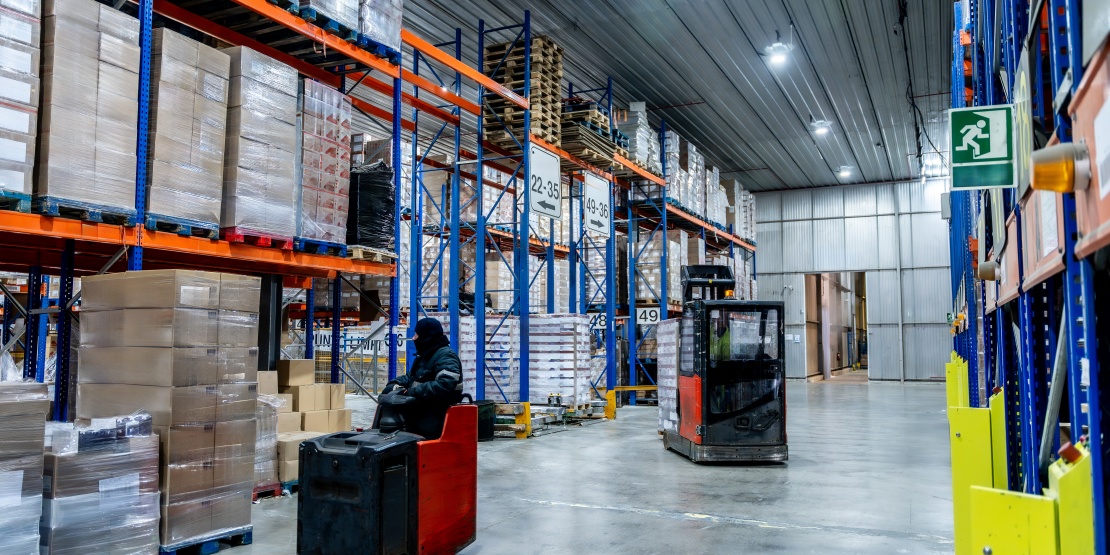
- Logistics and warehouse: forklift trucks and pallet trucks, connected lighting and industrial ventilation systems, compressors and material handling equipment.
- Office and workplace equipment: ergonomic furniture, IT and printing equipment, personal protective equipment (PPE) in high-turnover sectors.
- Industrial production and manufacturing equipment: CNC machine tools, measurement and control systems, presses and assembly equipment.
- Digital and technology equipment: Internet of Things (IoT) sensors, predictive maintenance systems, charging stations for electric fleets.
The more an asset can be instrumented and measured in its usage, the more naturally suited it is to the EaaS model, as performance-based billing becomes verifiable and auditable. The benefits of EaaS extend across the full equipment lifecycle — from original equipment procurement through to end-of-life management.
Discover our range of Eco-Friendly products
How to negotiate and manage an EaaS contract: SLAs, KPIs and exit clauses to secure your investment
Entering into an EaaS contract without a precise contractual framework means delegating operational risk management to the supplier. The Purchasing Director must approach negotiations on three key axes: agreed service levels, performance monitoring indicators, and exit conditions. Each of these axes directly determines the real value of the subscription over time. A thorough understanding of the EaaS business case is essential for any customer seeking sustainable, long-term value.
SLAs, KPIs and exit clauses: the Purchasing Director’s negotiation framework
A rigorous negotiation framework covers the following elements:
- SLA (Service Level Agreement): minimum guaranteed equipment availability rate, maximum intervention time in the event of a breakdown, replacement guarantee in the event of prolonged unavailability beyond a defined threshold;
- KPIs: monthly breakdown rate, mean time to resolution, cost per hour of effective usage, contractual frequency of technology updates and predictive maintenance operations;
- Exit clauses: conditions for early termination and associated penalties, responsibility for managing data from connected equipment, residual asset valuation, and end-of-life liability.
These clauses vary according to national legal frameworks: European contract law, UK Contract Law, the Swiss Code of Obligations, and Norwegian legislation each contain different provisions, particularly regarding liability in the event of failure and data transfer conditions.
EaaS and CSR strategy: how this model supports your circular economy objectives and non-financial reporting
EaaS has a CSR dimension that is often underestimated in financial analyses. Because the supplier retains ownership of the equipment throughout its entire lifecycle, they are structurally incentivised to extend that lifecycle: repairing rather than replacing, designing modular equipment, and recovering resources at the end of the contract. This logic is directly aligned with the requirements of the European Ecodesign for Sustainable Products Regulation (ESPR), which is being progressively rolled out and requires original equipment manufacturers to take repairability and recyclability into account from the design stage. For equipment manufacturers, EaaS also unlocks a recurring revenue stream, fundamentally transforming their revenue model.
On the non-financial reporting front, EaaS facilitates the integration of concrete ESG indicators. The traceability of connected equipment makes it possible to document reductions in energy consumption. Resources mobilised at end-of-life are managed by the supplier, which simplifies the calculation of Scope 3 emissions.
For companies subject to sustainability reporting obligations, this level of traceability represents a direct operational advantage.
At Manutan, we support organisations in their equipment decisions by integrating these sustainability and cost management challenges. Our role is to facilitate access to tailored solutions, without imposing a single model, because every customer situation deserves its own analysis.