

Summary:
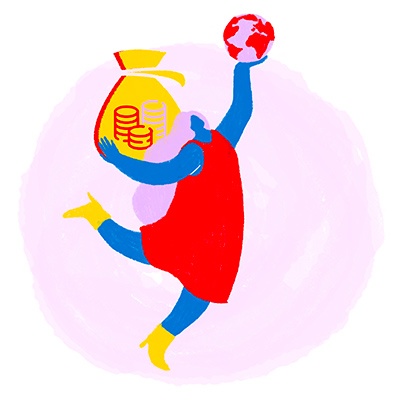
The product-as-a-service model is based on purchasing usage or performance rather than ownership of a product. It fits into the circular economy by maximising resource usage, extending the life cycle of professional equipment and reducing waste. This model also strengthens cash flow, operational efficiency and business agility in the face of economic constraints.
Contents:
- What is product-as-a-service?
- What are the advantages of product-as-a-service?
- How to adopt product-as-a-service in your procurement?
Among the many levers of the circular economy, "product-as-a-service" (PaaS) or "product as a service" business models are gaining momentum in the market. For companies, this means buying a product in the form of a service, instead of purchasing the product itself. They thus gain access to efficient professional equipment, with value-added services, at lower initial costs. In a context marked by shortages and inflation, where every organisation seeks to optimise resource allocation, PaaS is establishing itself more than ever as a strategic lever for sustainable procurement.
What is product-as-a-service (PaaS)?
With PaaS, businesses enter into the economy of functionality. They purchase usage or performance, rather than the product itself. PaaS offerings generally include services: customer support, installation, training, maintenance, asset management, data analysis… This model is particularly widespread in computing and mobility, but it can be applied to multiple sectors.
In this approach, the supplier retains ownership and responsibility throughout the product life cycle, bearing the associated risks. The supplier, therefore, has every incentive to extend the product life cycle and maximise resource usage.
The product-as-a-service (PaaS) circular business model can take different forms:
- Simple rental: the company uses and pays for professional equipment for a defined period;
- Pay-per-use: the company pays according to actual usage or consumption of the product, whilst the supplier ensures maintenance and updates;
- Pay-per-performance: the company pays based on the achievement of specific performance criteria or results attained, whilst the supplier ensures these criteria are met;
- Subscription model: the company pays a fee at regular intervals to access a product/service during a defined period, whilst the supplier manages maintenance and updates.
What are the advantages of product-as-a-service?
In addition to fitting into sustainability goals, PaaS models offer interesting competitive and operational advantages.
Improving working capital
With product-as-a-service (PaaS), capital expenditure (CAPEX) is transformed into operating costs (OPEX). Companies do not tie up their funds, they preserve their working capital. Especially since the predictable and continuous costs also cover maintenance, upgrades and end-of-life management. This facilitates financial planning.
Boosting process efficiency
Product-as-a-service (PaaS) enables businesses to access efficient professional equipment that is regularly updated. This reduces the risk of technical failure, through guaranteed services throughout the product life cycle (maintenance, updates…). Companies, but especially users, focus on the core of their activities.
Gaining flexibility
The PaaS model also offers a certain agility. Companies can adjust the volume of professional equipment and adapt their procurement according to customer needs. They gain adaptability, resilience and responsiveness to external events.
Contributing to the CSR strategy
By its very nature, PaaS fits into a circular approach. With this system, suppliers are incentivised to design more durable, repairable, and scalable products. The idea is to maximise usage, extend the product life cycle and reduce waste production.
To go further
François Johnston, CEO and Founding Partner of Johnston Circular, explains: "In 2004, Arnold Tukker already identified as-a-Service models as potential levers for environmental action. They bring into play two major levers.
The first is the supplier’s commitment to a result of usage and efficiency. In a Product-as-a-Service contract, the relationship is significantly different insofar as the supplier commits with the end customer on the result. These service-based models thus enable a shift from a volume-based, productivist approach to an efficiency approach - with positive effects on the environmental impact - where the more efficient you are, the more profitable you are.
The second lever concerns end-of-life management of the product. As the supplier’s interest is to use the least possible raw materials in order to increase profitability, the end-of-life product acquires interesting value. To recover this value, it must be possible to refurbish or recycle the raw material at end of life."
How to adopt product-as-a-service in your procurement?
The PaaS business model requires a fundamentally different approach to traditional procurement. It is no longer just about formalising a transaction, but about creating sustainable value, through long-term supplier relationships. In the world of procurement, we then talk about "buying as a service".
Identifying suitable product categories
The first step involves identifying the product categories where the product-as-a-service model offers value. Often, this addresses a genuine internal issue: poor management of assets, waste production, high initial costs, decarbonisation objectives… Procurement teams therefore have every interest in carrying out a profitability analysis to target promising products. Our advice: select a pilot project with low risk, but high impact to test this approach.
Structuring procurement management
The second step involves taking action. Procurement teams will begin by rethinking their tenders to open up to new approaches. The idea is to focus on functional specifications, describe the desired result and open dialogue with suppliers. Buyers must also adapt their evaluation tools and criteria. They can rely on TCO (Total Cost of Ownership) or TCTO (Total Cost of Temporary Ownership), functional specification checklists…
Managing the contract
Lastly, contractualisation is more complex than with traditional procurement. Product-as-a-service contracts must include various elements to secure the collaboration over time, in a shared value creation approach.
Contracts must specify:
- Responsibility for professional equipment;
- The scope of all services;
- Deliverables, as well as key performance indicators;
- Adjustment mechanisms;
- Performance and availability clauses;
- Contract termination terms;
- Governance.
Discover our circular services
Manutan Group wants to place the circular economy at the heart of its business model. That is why we offer a whole range of services designed to extend the product life cycle: the buy-back and revalorisation of your old professional equipment, maintenance and repair, refurbishment as a service but also equipment rental. Contact our procurement teams to find out more (available in Belgium, Czech Republic, Denmark, Sweden, Finland, France, Germany, Hungary, Italy, Netherlands, Norway, Poland, Slovakia, Spain, Switzerland, United Kingdom, Portugal, as of content publication date).
By refocusing procurement on usage, product-as-a-service (PaaS) enables the reconciliation of economic performance, operational efficiency and circular transition. It is now up to the procurement function to structure this transformation, to position itself as a creator of sustainable value.