


Supplier relationship management has become a strategic lever for procurement performance that goes far beyond cost control alone. Digitalisation, risk management, shared challenges, contracting and new forms of collaboration are all levers for creating long-term value.
Contents:
- What is supplier relationship management?
- Supplier relations: a lever for procurement performance?
- What levers can improve supplier relationships?
- Supplier relations at Manutan
Responsible for managing the company’s external resources, the procurement function plays a critical role in supplier relationship management. Far beyond cost negotiation, this remit is a genuine lever for differentiation and competitiveness. To create long-term value, procurement departments must build balanced relationships with their suppliers and service providers, with a view to mutual development.
What are supplier relations?
Supplier relations cover all the processes and interactions that link a company to its suppliers. The procurement function is responsible for supplier relationship management, with the aim of establishing mutually beneficial relationships and maintaining them over the long term.
This involves structuring, managing and developing strong supplier relationships, using effective tools, open communication and transparent practices.
In today’s complex and uncertain context, companies are now looking to go beyond a purely commercial relationship. The focus is on building genuine partnerships to strengthen trust, boost resilience and foster value creation.
There are generally three levels of supplier relationships:
- The transactional relationship, focused on the purchase and delivery of goods or services;
- The strategic alliance, in which the parties coordinate their actions to achieve common objectives;
- The partnership based on close collaboration and strategic alignment to maximise results over the long term.
In its most advanced form, supplier relationship management comes close to the concept of the extended enterprise, in which suppliers and service providers are involved in the organisation’s challenges. The supplier ecosystem then becomes a stakeholder in the operating model.
Supplier relations: a lever for procurement performance?
An effective supplier relationship generates tangible benefits for all stakeholders. It helps to improve performance, drive innovation and strengthen resilience.
Improving overall performance
Supplier relationship management based on communication brings lasting improvements to the three pillars of procurement performance: quality, cost and lead times (QCD). Buyers benefit from greater visibility of production capacity, delivery times and market developments. For their part, suppliers can optimise production and reduce waste thanks to better anticipation of needs.
Creating long-term value
In supplier relationship management, collaboration is also a powerful driver of innovation. Partners can co-create solutions that address shared challenges. This collaborative approach can cover a range of areas: developing new products, improving the user experience, reducing the environmental footprint… Both parties bring their own expertise, supporting shared value creation.
Strengthening resilience
Lastly, trust-based supplier relationships make it possible to deal more effectively with the unexpected. When faced with shortages, rising costs or supply chain disruptions, partners are more inclined to collaborate to identify alternative solutions quickly. This helps to secure operations and get them back up and running swiftly.
What levers can improve supplier relationships?
To develop efficient, value-creating partnerships, procurement departments can draw on several best practices, ranging from digital tools to different forms of collaboration.
Digitalising supplier relationship management
To simplify and streamline their supplier management of their supplier relationships, companies have every interest in equipping themselves with SRM software (Supplier Relationship Management). Such technology solutions offer 360° visibility and real-time monitoring of partners’ activities. This promotes transparency and the quality of communication.
Managing risks and opportunities
Efficient supplier relationship management relies on a solid understanding of your ecosystem. That is why it is important to map the risks, as well as the opportunities, presented by suppliers, and then implement appropriate actions. The whole purpose of this approach is to involve suppliers in a continuous improvement approach, on a win-win basis.
Structuring the contract carefully
To secure the supplier relationship, it can be wise to put it on a contractual footing. This contract must be balanced and clear. For example, it should set out payment terms, but also the terms of collaboration, delivery, evaluation, termination, etc. The aim here is to reduce the risk of potential disputes and to foster smooth cooperation.
Supporting CSR commitments
Supplier relationship management plays a decisive role in the success of sustainable procurement initiatives. By working jointly with their partners, companies can reduce their supply chains’ impact on the environment, improve working conditions and promote more ethical practices. This is a major issue, as Scope 3 , which notably covers purchasing-related emissions, accounts for up to 90% of companies’ total emissions[1]. It is therefore essential to involve your suppliers in your CSR (Corporate Social Responsibility) strategy.
Optimising costs together
Companies can also work hand in hand with their suppliers to optimise processes and thus reduce direct and indirect costs. Several levers can be used: digitalising transactions, rationalising the supplier portfolio, optimising product consumption, etc. All these projects allow both partners to reap shared benefits, supporting performance.
The Savin’side® method
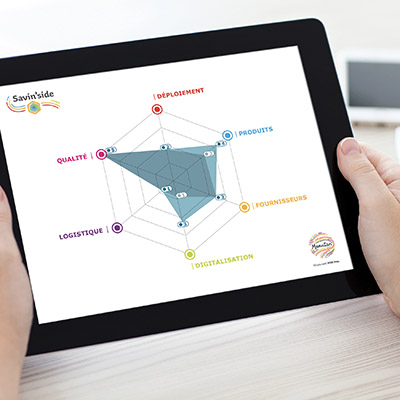
Manutan has developed a method called Savin’side® to support organisations in optimising their long tail spend. Drawing on data analysis, a Lean framework and an agile approach, it identifies the main levers for operational, economic and environmental optimisation (available in Belgium, the Czech Republic, Denmark, Sweden, Finland, France, Germany, Hungary, Italy, the Netherlands, Norway, Poland, Slovakia, Spain, Switzerland, the United Kingdom and Portugal, at the time of publication).
Reducing payment terms
While suppliers must honour their contractual commitments, companies must do the same with regard to invoice payment terms, trying to shorten them as much as possible. In the event of late payment, it is essential to communicate and provide visibility to partners. In this area, reliability and transparency foster a climate of trust.
Adopting new forms of collaboration
Companies are working with an increasingly diverse range of partners: start-ups, social and solidarity economy businesses, work integration enterprises… To make the most of them, it may be necessary to adapt collaborative models: open innovation, co-creation or long-term commitments are all levers for developing tailored partnerships.
Supplier relations at Manutan
At Manutan, we are committed to building lasting relationships with our more than 4,000 key suppliers. We focus on win-win partnerships based on trust, integrity and fairness.
For more than 60 years, we have been developing strong relationships with key players in our markets, from large groups to local SMEs, with a view to creating long-term value.
We rigorously assess and track supplier performance in terms of quality, service levels and CSR commitments, as well as overall supplier satisfaction. Our key performance indicators include “With Love Suppliers”, which measures the quality of our partnership with our suppliers. It is a metric we monitor at the same level as turnover, operating profit and customer satisfaction.
At the same time, we structure and develop our relationships with suppliers through a range of initiatives: digital solutions to streamline communication, support to accelerate their decarbonisation trajectory, annual events to meet and showcase their offering…
Antoine Compin, Managing Director of Manutan France and Iberia, adds: “We have a real ambition: to forge strong, long-lasting partnerships with our suppliers and to nurture the relationship we have with them. This relationship, this history and this shared knowledge with our suppliers enable us, when selecting them, to make sure that their code of ethics is consistent with our obligations, but also that they themselves pursue a genuine sustainable procurement policy.”[2]
Did you know?
- 76% of suppliers in our Business division have signed our Code of Conduct;
- Over 80% of our suppliers have undergone CSR assessments.
Supplier relations are therefore a strategic asset, at the heart of corporate intangible assets. They deserve to be managed with as much attention as other performance levers. This is where the procurement function comes in, to unite, lead and build the loyalty of this ecosystem of partners.