


Summary:
Carbon insetting is a key lever in corporate net zero strategies, particularly for tackling scope 3 emissions. Unlike carbon offsetting, carbon insetting involves investing directly in projects at the heart of the value chain, in collaboration with suppliers and territories. In addition to reducing emissions, carbon insetting strengthens supply chain resilience, creates positive impacts and generates global value. The procurement function plays a central role in deploying these carbon insetting projects.
Contents:
- What is carbon insetting?
- What are the benefits of carbon insetting?
- What does a carbon insetting project look like?
- What is the role of the procurement function in carbon insetting?
In the fight against climate change, many companies are committing to net zero trajectories. In this approach, they can rely on carbon insetting. This involves investing in sustainable projects within their value chain to reduce GHG emissions and improve carbon storage. Carbon insetting particularly concerns scope 3, which accounts for the majority of corporate carbon footprints.
What is carbon insetting?
Carbon insetting involves financing or deploying carbon reduction and/or sequestration projects directly within a company's value chain. These carbon insetting projects are based on a collaborative logic, through direct investment in ecosystems, suppliers or local communities. Carbon insetting can take different forms: regenerative agriculture, agroforestry, energy transition of suppliers, optimisation of industrial processes…
In the context of a net zero emissions strategy, priority is always given to reducing greenhouse gas emissions within the company, and particularly its ecosystem. This is precisely what Leon Laubscher, Climate Strategy Programme Lead at Unilever, advocates: "A good climate leader starts by managing their own internal emissions. But a forward-thinking leader also tackles their supply chain. This may seem altruistic on a planetary scale, but it's simply good business sense: it's essential to ensure that your suppliers can also go through the transition you want to encourage. Use your purchasing power as a positive force, by engaging with your suppliers and helping them manage and reduce their own emissions."
This is the logic behind carbon insetting. As Andrea d'Avack, Global Chief Sustainability Officer at Chanel, emphasises: "Carbon insetting allows us to create shared value with our suppliers and realise our climate ambition. We support several carbon insetting projects that promote the preservation of local ecosystem health, contributing both to reducing carbon emissions and promoting natural carbon capture and storage. This approach also helps strengthen climate resilience, bringing significant benefits to the communities surrounding these landscapes."
However, it should be noted that there is not yet a clear consensus to define the framework and guidelines of carbon insetting. Nevertheless, many stakeholders are working on this and large companies have already embraced carbon insetting.
Insetting vs offsetting
Unlike carbon insetting, carbon offsetting involves compensating for carbon emissions through projects external to the company. This relies more on a transactional logic, through the purchase of carbon credits from positive impact projects.
What are the benefits of carbon insetting?
Carbon insetting practices offer environmental, but also economic and strategic advantages for businesses.
Sustainably reducing carbon emissions
First, through carbon insetting, companies can reduce their indirect emissions by acting directly with their suppliers and partners. Carbon insetting plays a key role in reducing their scope 3 emissions, which account on average for between 50 and 90% of corporate greenhouse gas emissions. Carbon insetting thus contributes to achieving their carbon neutrality objective.
Strengthening supply chain resilience
Sustainable practices in carbon insetting, better management of natural resources and collaboration with suppliers help increase productivity, whilst ensuring the sustainability of raw material supplies. Carbon insetting helps reduce environmental and climate risks, improve transparency and strengthen value chain resilience in the long term.
Generating positive impacts
Carbon insetting projects help restore natural carbon sinks and local water cycles, improve soil health, combat deforestation and biodiversity loss. All this plays a key role in reducing carbon emissions, but also more broadly in preserving the livelihoods of producers and local communities.
Creating value
Carbon insetting also represents a strategic lever for value creation. In this way, companies open up new economic opportunities and stimulate innovation. Carbon insetting is characterised, for example, through improved yields, new sources of income for all stakeholders or new market segments.
What does a carbon insetting project look like?
Let's take the example of Kering, a global luxury group, with cashmere. This fibre is essential to the Mongolian economy, but also a critical raw material for the luxury sector. Faced with the rapid degradation of Mongolian pastures, Kering financed the "South Gobi Cashmere Project". A carbon insetting programme to address climate, but also economic and social challenges.
This carbon insetting project aims to sustainably transform upstream cashmere supply chain practices by supporting herders: sustainable pasture management, improved animal welfare, biodiversity conservation and income diversification. Thanks to better herd management and improved cashmere quality through carbon insetting, herders can reduce the number of goats whilst maintaining or even improving their income, thus securing supply without depleting natural resources.
The first results of this carbon insetting project have shown gains in fibre quality, herders' income and biodiversity preservation. Ultimately, through carbon insetting, Kering reduces the environmental impacts of its scope 3, whilst strengthening the sustainability and robustness of its supply chains.
What is the role of the procurement function in carbon insetting?
In the case of carbon insetting projects, many functions are mobilised within the company. The team responsible for sustainable development often leads these carbon insetting initiatives, but the finance, legal and procurement functions also have a key role to play. Three main missions fall to procurement teams in carbon insetting: mapping, partnership and management.
Step 1: Mapping
Buyers begin carbon insetting by identifying high carbon impact categories and strategic suppliers (raw materials, transport…). This first step in carbon insetting allows for effective prioritisation of actions.
Step 2: Partnership
Next, they participate in co-constructing carbon insetting projects integrated into the commercial relationship. This could be the deployment of renewable energy, the implementation of low-carbon practices, the development of green logistics solutions… By committing to the long term through carbon insetting, procurement becomes a facilitator of transformation.
Step 3: management
Lastly, through carbon insetting, procurement will implement key performance indicators to track emission reductions and integrate them into their reporting. This is how they secure the carbon value created through carbon insetting, in connection with supplier performance.
Carbon insetting thus helps improve environmental, social and economic impacts within a company's supply chain and its operations. Carbon insetting is an integrated approach that ensures a credible and sustainable carbon trajectory.
Savin'side® to decarbonise your procurement
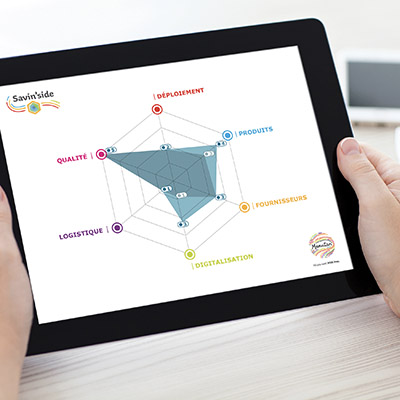
The Manutan Group has created the Savin'side® method to support you in optimising your procurement. This methodology, proven with hundreds of large companies, is based on data analysis, a Lean framework and an agile approach. One of its key levers focuses on procurement decarbonisation, through the substitution of products with a lower carbon footprint as well as the activation of circular services, such as the collection and recovery of your old equipment. (Service available in Belgium, Czech Republic, Denmark, Sweden, Finland, France, Germany, Hungary, Italy, Netherlands, Norway, Poland, Slovakia, Spain, Switzerland, United Kingdom, Portugal, as of content publication date)