


Overhead costs are a major lever for cost optimisation, directly impacting the company's profitability. Pooling purchases, supplier rationalisation, contracting, digitalisation and building a procurement culture among internal customers are the main levers for generating lasting savings without compromising procurement performance or service quality.
Contents:
- What are overhead costs?
- The three types of overhead costs
- Five strategies for optimising your overheads
Against a backdrop of inflation, many companies are looking to reduce their overheads. The real challenge is optimising this spending by pulling the right levers, without compromising service quality, operational continuity or internal customer satisfaction. To achieve lasting results, businesses need a structured approach that combines cost control, process optimisation and stronger relationships with stakeholders.
What are overhead costs?
Overhead costs cover all the purchases needed for businesses to run smoothly on a day-to-day basis, without directly contributing to the production of goods or services. Also known as indirect procurement or non-production purchases, they span a wide range of categories.
These typically include:
- Office furniture and supplies;
- Cleaning, maintenance and upkeep services;
- Business travel;
- Insurance;
- IT and telephony services;
- Expenses directly related to building and energy;
- Etc.
Taken individually, these purchasing categories may not seem strategic. But added together, they account for up to 25% of a company's total spend.
As Gwenaëlle Paporello, former overhead buyer at the SAMSE group, points out: “Overhead spend […] is an area where the savings achieved are substantial and require little investment (information systems, labour, etc.). It is therefore a significant lever, and the gains show up on the bottom line of the income statement.”[1]
Good control of overheads directly impacts company profitability and helps strengthen the long-term viability of the business.
The three types of overhead costs
In business, overhead costs are commonly classified into three categories: fixed costs, variable costs, and semi-variable or semi-fixed costs.
Fixed costs
Fixed costs, or structural costs, remain constant and independent of turnover. They are therefore predictable and easy to budget for. Examples of overhead costs include rent, insurance, etc.
Variable costs
Variable costs change according to production volume or turnover. They can rise or fall depending on the level of activity. Examples include temporary staffing or subcontracting costs, and marketing expenses…
Semi-variable or semi-fixed costs
Semi-variable costs include a fixed part and a variable part, which is linked to the company's level of activity. This applies, for example, to subscription fees and energy consumption.
Five strategies for optimising your overheads
Managing overheads isn't just about negotiating prices. Procurement departments have several complementary levers for reducing costs while maintaining the organisation's performance.
Pooling purchases
One of the first levers is to pool purchasing volumes. By consolidating requirements across different departments, sites or subsidiaries, companies strengthen their negotiating power with suppliers. This approach also creates an opportunity to put several suppliers in competition with one another, where the market allows.
This generates economies of scale and secures more favourable terms, such as volume discounts, reduced logistics costs, additional services, and so on. As a result, companies achieve direct savings that can be reflected in their income statements.
Rationalising your supplier panel
Pooling purchases usually goes hand in hand with rationalising the supplier portfolio. Overhead costs can involve too many suppliers. The real challenge is to reduce and restructure your supplier panel around partners capable of covering several categories, particularly for non-strategic products.
Beyond the direct savings negotiated and achieved, companies also lighten the complex, costly and time-consuming administrative work involved in supplier management. As an example, the average cost of managing a supplier is estimated at €1,000[2] a year. This approach also means lower risk and better visibility over spending.
Contracting
Setting up framework agreements is another effective tool for controlling overheads. These contracts make it possible to agree prices and commercial terms with suppliers in advance: service levels, quality commitments, lead times, invoicing arrangements, and so on. Employees then have access to listed suppliers, negotiated offers and efficient channels for placing orders, all of which helps reduce maverick spend.
However, signing a framework agreement alone doesn't guarantee the expected results. The real challenge lies in ensuring these contracts are properly rolled out. Lead buyers need to work with their suppliers to implement a tailored action plan: site visits, call campaigns, information or training sessions, regular reporting. This is an essential step in securing team buy-in and maximising potential savings.
Digitalising your processes
Digitalisation is also one of the main levers for cutting overheads. E-procurement solutions help optimise the entire purchasing cycle, from sourcing products through to paying the invoice. They streamline operations, speed up order processing and automate many low value-added tasks. On top of these productivity gains, they also deliver better visibility, thanks to greater centralisation and traceability of spending.
Aurélie Wendling, National Sales Manager at Manutan, adds: “Digitalising transactions makes it possible to go paperless across the entire procure-to-pay process. When this process is handled in the traditional way, costs average around €95[3] per transaction. When a transaction is fully digitalised, with a punch-out system in place along with paperless orders and invoices via EDI, the cost per transaction is estimated at €19[4]. That represents savings of up to €76[5] per transaction. [This digitalisation] allows procurement departments to improve efficiency and make everyday life easier for teams by automating some of their tasks.” [6]
Raising awareness among internal customers
Lastly, no strategy for optimising overheads can succeed without buy-in from internal customers. They play a decisive role in controlling these everyday expenditures. That's why it's essential to bring them on board with this approach by spreading a genuine procurement culture. It's important to reinforce policies, processes and best practices: anticipating needs, favouring listed suppliers, going through the right channels, following validation workflows... This plays a key role in eradicating maverick spend, a scourge whose hidden costs are particularly high.
It's also important to help them better manage internal consumption. This means empowering them to make better use of resources while cutting waste, whether that's energy, consumables or service provision.
Manutan supports you
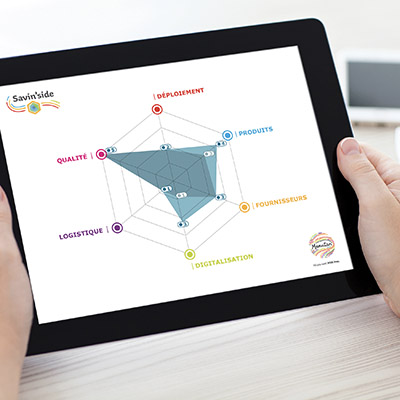
Through its Savin'side® method, Manutan supports you in optimising your overheads. Supplier rationalisation, framework agreement roll-out, digitalisation of transactions... Our experts help you reduce spending and improve operational efficiency (available in Belgium, Czech Republic, Denmark, Sweden, Finland, France, Germany, Hungary, Italy, the Netherlands, Norway, Poland, Slovakia, Spain, Switzerland, the United Kingdom, Portugal, at the time of publication).
As you can see, optimising overheads isn't about cutting budgets at any cost. By combining the right levers, it's possible to generate lasting savings while preserving service quality, operational efficiency and internal customer satisfaction.
[1]Gwenaëlle PAPORELLO (former overhead cost buyer, SAMSE group), Comment valoriser les actions des achats frais généraux auprès des utilisateurs et prescripteurs internes ? Le cas du groupe SAMSE, La communication interne, 2016, [https://dumas.ccsd.cnrs.fr/dumas-01445699v1/file/PAPORELLO%20Gwenaelle_MGT2-Achat_Apprentissage.pdf]
[2] Around £850
[3] Around £80
[4] Around £16
[5] Around £64
[6]Aurélie WENDLING (European Key Account Manager 2022–2024, Manutan), Webinar: Long tail, indirect and maverick spend... understanding them better to optimise them, 17 January 2023, 30 min, Manutan