


Summary:
Zero-Based Budgeting (ZBB) involves starting from scratch to align spending with actual needs and eliminate unnecessary costs in the company. In contrast to the incremental budgeting approach, ZBB requires every expenditure line to be justified. It thus constitutes a powerful lever for sustainable performance.
Contents:
- What is Zero-Based Budgeting (ZBB)?
- Zero-Based Budgeting: what are the key stages?
- What are the advantages and challenges of ZBB?
In an uncertain economic context, companies are looking to become more resilient. For many of them, the time has come for transformation and reorganisation of their cost structures. Among the tools at their disposal is Zero-Based Budgeting. As its name suggests, it is a budgeting method that involves starting from zero for each new budgetary period. This approach is particularly interesting in helping procurement teams optimise costs and improve overall procurement performance.
What is Zero-Based Budgeting (ZBB)?
Zero-Based Budgeting (ZBB) consists of justifying all expenses from zero within the company, as soon as a new financial year opens. In other words, the budget is built from a blank slate in order to re-examine every expenditure. This contrasts with the traditional incremental budgeting method, where the previous budget is adopted by default and adjusted upwards or downwards.
With Zero-Based Budgeting, the idea is to allocate resources according to actual needs, not historical data. Businesses can thus identify and eradicate unnecessary costs, bring their expenses under control and focus on profitability. When properly implemented, the Zero-Based Budgeting method generates substantial cost savings. According to GEP, this approach can reduce general and administrative expenses by 15 to 35%.
Zero-Based Budgeting also involves a profound cultural change within the company. This is highlighted by Kris Timmermans, Lead - Supply Chain & Operations and member of Accenture's Global Management Committee: "Unlike traditional cost management techniques that use a ‘cut-the-fat and gain-it-back’ approach like every fad diet does, adopting a zero-based mindset requires a full cultural transformation within an organisation. It must become ingrained in how people think and work so that it begins to just happen naturally – that's how you prevent the ‘weight’ from coming back".
Zero-Based Budgeting: What are the key stages?
Implementing Zero-Based Budgeting requires time and resources. Typically, this approach is carried out by a cross-functional team (finance, operations, procurement, human resources, IT…) in four main stages.
Stage 1: Establishing a framework
The first stage consists of selecting the cost centres to focus on. The Zero-Based Budgeting approach does not necessarily apply to the entire company. The project team will plan all of this, starting where budgets seem poorly aligned with the organisation's objectives and where major cost reduction opportunities lie. The team can then plan to apply Zero-Based Budgeting every two or three years, for example, and use a standard budgeting process for interim periods.
Stage 2: Analysing costs
In this second stage, we get to the heart of the matter. The project team will list activities by cost centre, identify those deemed non-essential or strategic and make collective decisions. Each cost is then documented and justified through detailed analysis.
Stage 3: Building the budget
The third stage consolidates the proposals. The project team prioritises activities, tests and validates assumptions and then submits the final budget to the decision-making bodies. The idea is to iterate until final approval.
Stage 4: Monitoring performance
Lastly, Zero-Based Budgeting must be part of a continuous improvement approach. Once implemented, it is important to monitor budget performance. To do this, the team will regularly compare results against objectives and make any necessary adjustments when required. This ongoing reporting and analytics help maintain the effectiveness of the Zero-Based Budgeting process.
What are the advantages and challenges of ZBB?
The Zero-Based Budgeting method transforms procurement practices within companies to create sustainable value. However, this new framework can be a complex process to implement.
Benefits: From cost management to collective commitment
Zero-Based Budgeting enables organisations to bring their costs under control through a systematic re-evaluation of expenditures. Those deemed essential and strategic are justified, whilst those that prove unnecessary are eliminated. This leads to better resource allocation and improved budgeting process efficiency.
However, Zero-Based Budgeting goes well beyond cost optimisation. This thorough and informed examination makes it possible to better align spending with company strategy, whilst gaining agility to respond to market developments. This creates opportunities for strategic growth initiatives.
It also helps create a culture focused on cost reduction. Each department questions its budget and justifies expenditure lines, focusing on its actual needs. This establishes a framework where transparency and collaboration are paramount. Ultimately, everyone becomes accountable for contributing to this collective dynamic, with clear objectives and effective management.
Challenges: From complexity to technical requirements
However, it remains an exercise that is both complex and time-consuming. With this method, companies build their budgets from scratch each time. It is therefore much longer than with the traditional budgeting approach. It requires resources, management support, but also team buy-in.
Nevertheless, Zero-Based Budgeting procedures must not stifle innovation. Short-term savings must not override long-term advantages. This can happen when cutting costs from the Research & Development department or strategic objectives, for example. The budgeting process must maintain space for future growth and technological investment.
Lastly, this method requires solid data analytics capabilities. Businesses must be able to rely on appropriate technological solutions and effective platforms that centralise spending data, offer real-time analytics and collaborative tools. AI (Artificial Intelligence) and advanced technology can support this process, whilst maintaining limited complexity and clear reporting.
The Savin'side® method
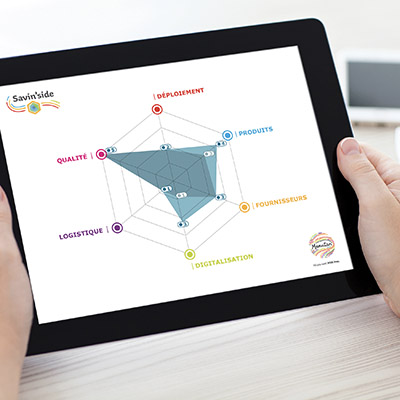
To go further in cost reduction, the Manutan Group has created the Savin'side® method dedicated to long tail spend. Like Zero-Based Budgeting, this methodology involves reviewing all expenditures from scratch, analysing data with precision and eradicating inefficiencies. Savin'side® thus helps organisations bring their long tail spend under control, whilst optimising their Total Cost of Ownership (TCO). Service available in Belgium, Czech Republic, Denmark, Sweden, Finland, France, Germany, Hungary, Italy, the Netherlands, Norway, Poland, Slovakia, Spain, Switzerland, the United Kingdom, Portugal, as of content publication date.
Thanks to Zero-Based Budgeting, companies manage their costs rigorously and can more easily identify waste and sources of savings. This is an undeniable advantage for maintaining their financial stability and prosperity during periods of uncertainty. Zero-Based Budgeting thus proves to be a formidable lever for generating value quickly and sustainably.